

Optimizing digital navigation with mobile-first design and comprehensive patient-family research, aligning 75% of mobile traffic with real behaviors to simplify access and reduce friction.


Partnered closely with cross-functional teams to foster shared ownership of research insights and design decisions, ensuring alignment between family needs, feasibility, and organizational goals.
Placed families at the center of every design decision, using qualitative research and user testing to create intuitive, mobile-first experiences that reflect real-world behaviors.

Analyzed traffic patterns, engagement metrics, and usability data to identify critical path opportunities to optimize navigation, prioritize high-impact journeys, and guide evidence-based design choices.
Leveraged deep experience in healthcare systems and digital patient experiences, blending industry best practices with family-centered insights to deliver solutions that are practical, scalable, and compliant.
Children's Wisconsin is the region’s only independent healthcare system dedicated solely to the health and well-being of children providing a wide range of care and support, working to ensure every child and family served receives nothing but the best.
"Working with Oliven Labs will infuse a lot of energy into your project. The team conducted a tremendous amount of research and involved us in every step of the way. What I was most impressed with were the deliverables, which we could easily take action on for developing our implementation plans."
Julie Gau
Director of Marketing and Technology
Children's Wisconsin
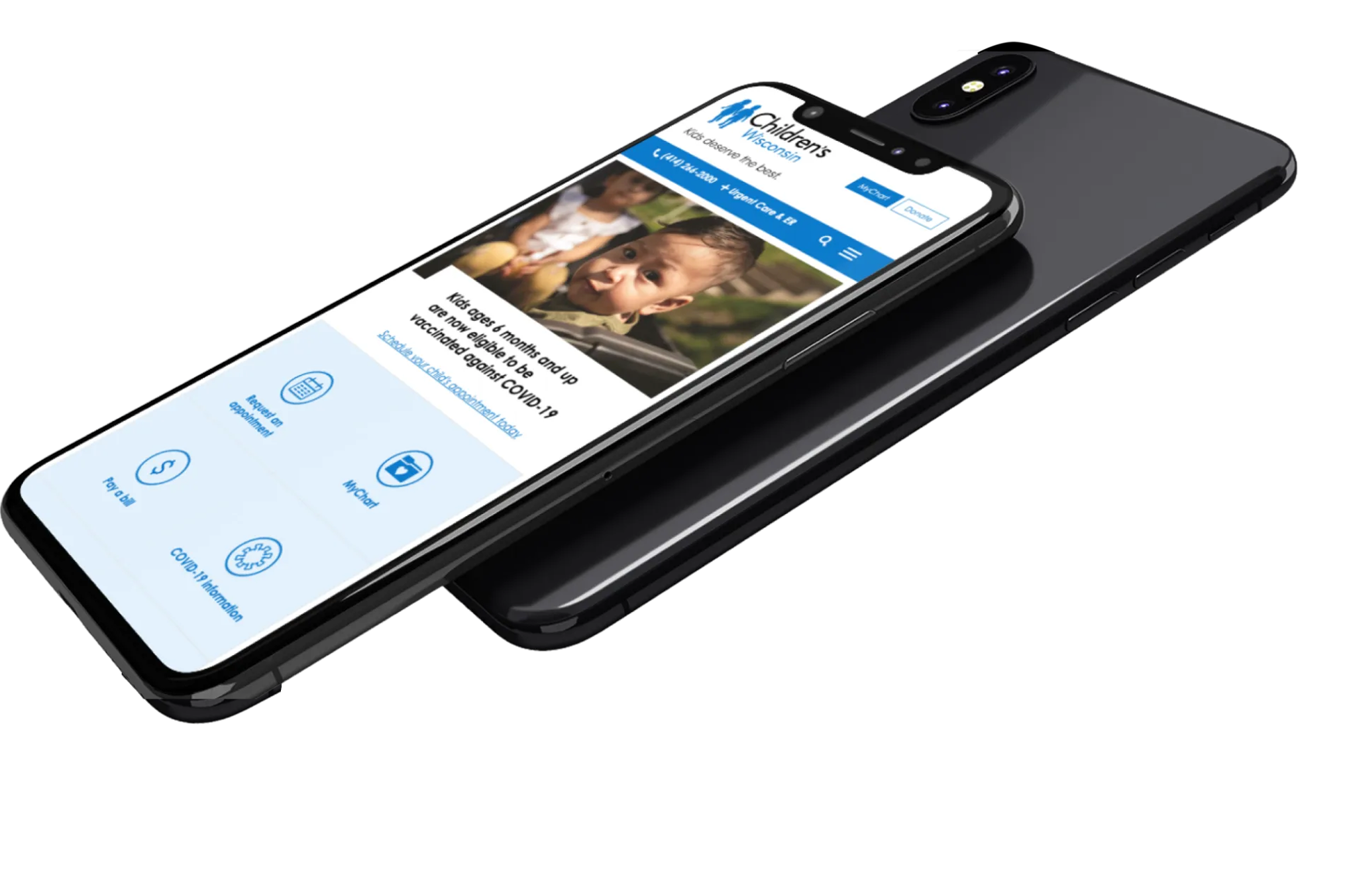
Children's Wisconsin saw an opportunity to better serve families where they already were: on their phones, searching for care information in real time. With over 75% of traffic coming from mobile devices, reimagining the existing desktop-first navigation could transform how families connect with the care they need. The shift represented a chance to align the digital experience with how parents naturally seek healthcare information.


Mobile-first care that aligns with how families actually seek help.

70% of healthcare searches start on mobile
Existing desktop-first navigation forced mobile users through unnecessary barriers at moments they most needed fast, clear paths to care, undermining the digital front door and patient family experience.
94% prioritize easy navigation
Parents exploring services, investigating referred care, or seeking information via Children’s existing website faced complex journeys that increased effort and reduced satisfaction across high-value scenarios.
90% of top healthcare sites are mobile-optimized, as families expect seamless phone access
The mobile habits of patient families created an opportunity to optimize a unified navigation model, enhancing trust, easing access, and advancing Children’s Wisconsin’s broader digital access and growth objectives.

Oliven Labs partnered with Children's Wisconsin to redesign their digital experience around how families actually search for care. Through interviews, card sorting, tree study, journey mapping, and usability testing with real patient families, the team uncovered critical navigation pain points and translated them into compelling personas. Working collaboratively with stakeholders, mobile-first navigation concepts were prototyped and tested to balance family needs with platform capabilities, resulting in a streamlined system built not just for how families search today, but designed to evolve with them.

Conducted targeted exploratory interviews, card sorting, tree study, journey mapping, and virtual usability studies with patient families to deeply understand their current navigation behaviors on their website, uncovering real pain points and preferences in how parents seek care information on mobile devices during urgent moments.

Synthesized research into compelling, data-backed personas and audience segments, representing key parent types from general explorers to recently diagnosed families, that equipped executives with powerful, story-driven tools to secure buy-in and drive adoption of the modernized navigation experience.

Led cross-functional stakeholder validation sessions to review research findings, refine personas, and prioritize navigation concepts, ensuring alignment between family insights, feasibility, and organizational access goals before final prototyping. Partnered with families to uncover unmet needs and the emotional toll of fragmented care, balancing staff perspectives with lived family experiences.

Designed and rigorously tested navigation concepts, including potential new information architecture, through prototype usability studies and card sorting with target audiences, ensuring realistic implementation within the existing platform while delivering an accessible, fully mobile-friendly interface.

Identified opportunities to blend proven industry patterns with family-specific insights for a more intuitive, scalable structure that works seamlessly within healthcare system constraints.

Families navigate differently depending on entry point and context, so the site was reorganized to enable faster, intuitive wayfinding while maintaining access to the full range of services.
Parents rely on a trusted, mobile-friendly environment to explore health information, leading to expanded mobile resources that deliver clear, reliable guidance for both new and returning families.
Families spent more time on the site and returned more often when we highlighted timely health needs, such as sports forms, flu shots, and culturally relevant pediatric updates, which boosted engagement, repeat visits, and appointment bookings.
Combining behavioral data with family input, the site’s core navigation was restructured to reflect true search patterns and prioritize high-value pathways.
The mobile-first redesign of Children’s website delivered intuitive, behavior-driven navigation that reduced friction, sped access to care, and aligned with how parents actually searched on mobile. Rooted in real family mindsets, the new IA increased usability while expanding cross-marketing visibility across Children’s Wisconsin’s full range of services. Patient-family research showed that families engaged longer, returned more often, and scheduled care more easily, strengthening overall trust and retention. The scalable architecture also revealed new care opportunities, positioning Children’s Wisconsin for continued digital growth.

