
For health plans, member experience is no longer a soft metric. It shows up in Stars ratings, CAHPS scores, retention, and the cost of replacing every member who leaves. Yet most service models are still reactive. They wait for the frustrated member to call, and by then the damage is done.
A recent HBR article shows what happens when a plan flips that model around.
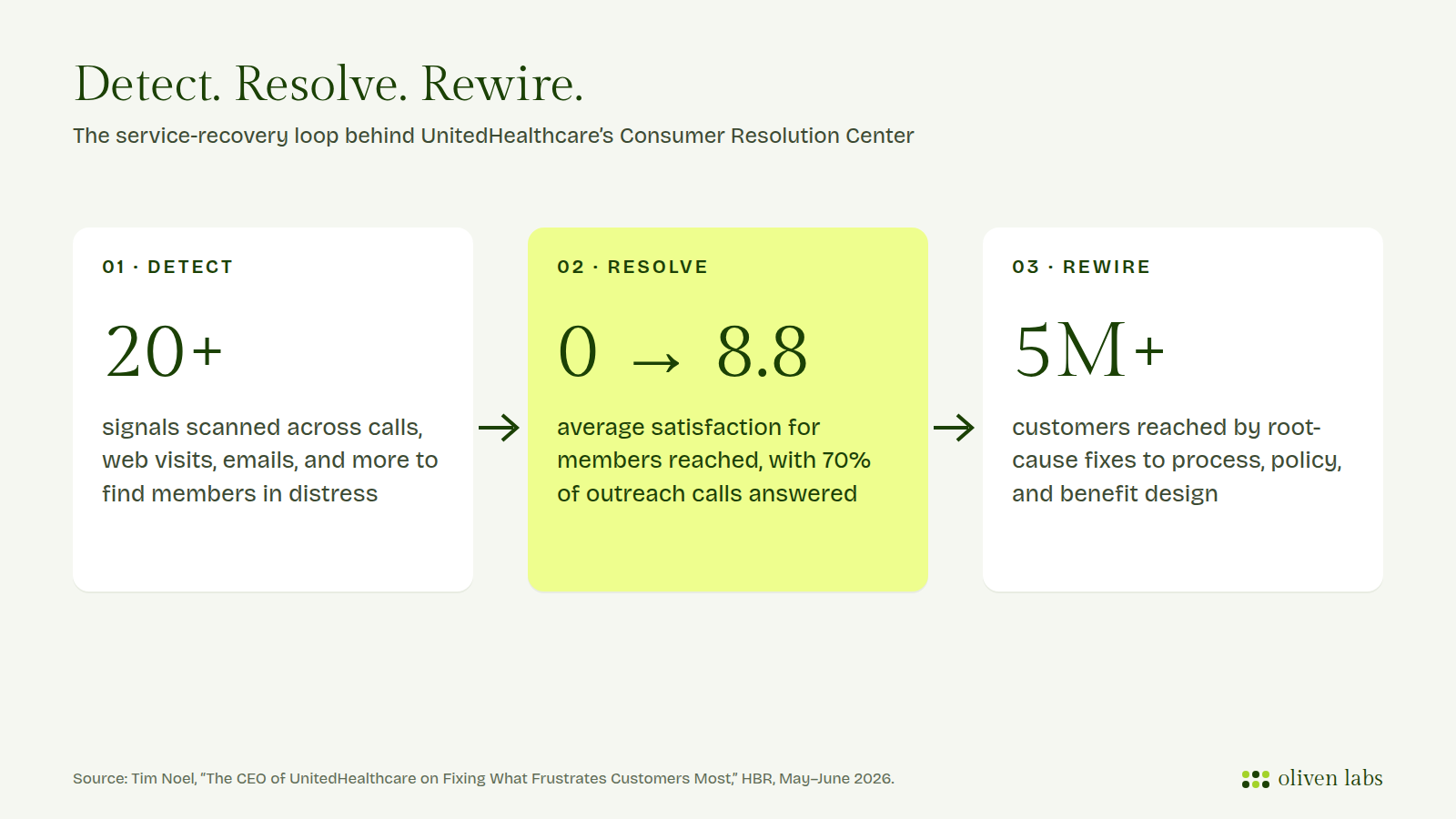
In the May–June 2026 issue of HBR, UnitedHealthcare CEO Tim Noel describes the company's Consumer Resolution Center, launched in 2023. The team used AI to analyze 100 million recorded calls and identify the factors that most often lead to member distress. The resulting algorithm now scans for more than 20 signals across every member interaction, including calls, website visits, and emails. (HBR, May–June 2026)
Consultants then call struggling members before those members call them. According to Noel, 70% of those outreach calls are answered. The center has served 150,000 members, moving their average satisfaction from zero to 8.8 out of 10, and root-cause fixes have reached more than 5 million customers. The company says the center has recouped its $20 million to $25 million investment many times over.
Proactive outreach only works if members trust it. A call that says "we noticed you have been having trouble" can feel caring or intrusive depending on how it is handled. In a January 2026 HBR article, Ashley Reichheld, Sebastian Goodwin, and Courtney Sherman explain why AI transparency is so hard to get right: say too little and people get suspicious; say too much and they tune out. (HBR, January 2026)
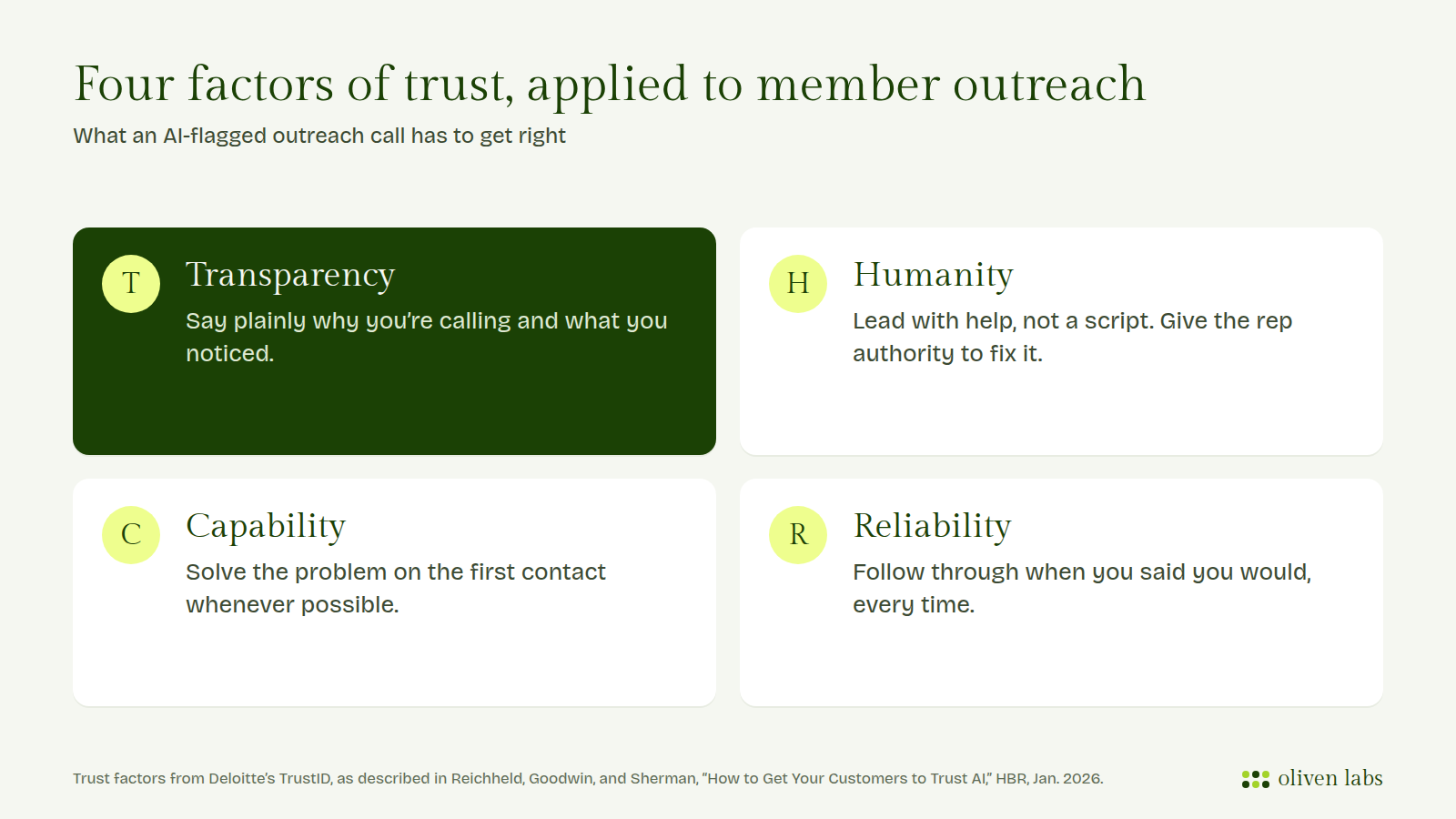
They draw on Deloitte's TrustID research, which measures four factors that tend to rise and fall together: transparency, humanity, capability, and reliability. Applied to member outreach, those factors become a practical checklist.
If you sell to health plans, the UnitedHealthcare story is also a buying signal. Payers are looking for tools that move the numbers they are measured on. That has three implications for product teams:
Oliven Labs provides end-to-end product strategy, UX, and engineering for healthtech companies serving Medicare Advantage carriers, commercial health plans, and FMOs. Platforms we have built serve more than 1 million Medicare beneficiaries and have delivered more than $100 million in retention impact. We design member experiences, payer portals, and agent platforms with HEDIS, Stars, and compliance built in. Learn more on our Payer Member Experience page.
Ready to build products payers buy and members trust? Let's talk.
Figures from HBR articles are attributed to their authors. Oliven Labs results are drawn from olivenlabs.com.
Want to join us as a thought partner for our next article series?